A distributor needs three hundred units of a part number that isn’t priced the same way twice. A hospital procurement team needs a formal quote with a purchase order number attached before anyone can even think about checkout. A construction supplier’s best account always negotiates freight into the unit price, and no static product page will ever reflect that.
This is the daily reality behind a WooCommerce quote request workflow. Standard checkout assumes a single price, a single buyer type, and an instant transaction, which works well for retail and fails quickly for manufacturers, wholesalers, and distributors running on negotiated terms. A request-for-quote system is not an added feature bolted onto a store. It is the procurement process the business already runs, translated into a structure WooCommerce can support.
Most articles on this topic stop at plugin installation and a “request a quote” button. This guide starts where those articles end, covering the architecture, governance, and operational decisions that determine whether a WooCommerce RFQ system actually holds up once real sales volume, real pricing complexity, and real ERP data enter the picture.
Quick Answer: What Is a WooCommerce Quote Request?
A WooCommerce quote request is a workflow that lets a buyer submit a product list for custom pricing instead of paying a fixed listed price at checkout. A sales or pricing team reviews the request, applies negotiated, contract, or volume-based pricing, and returns a formal quote the customer can accept, revise, or convert into a purchase order. It replaces instant checkout with a structured pricing and approval step suited to B2B procurement.
Why Fixed Pricing Doesn’t Work for Modern B2B Commerce
Fixed pricing assumes every buyer pays the same amount for the same product on the same day. Enterprise B2B rarely works that way. Contracts, volume commitments, and account history all change what a specific customer should pay.
A distributor with a three-year supply agreement and a first-time buyer researching the same part number cannot share a single list price without one side losing money or the other walking away. Add long sales cycles, multi-stakeholder approvals, and freight or tooling costs that vary by order, and a static price field on a product page becomes a liability rather than a convenience.
This is exactly why a WooCommerce quote request model exists alongside standard checkout rather than replacing it. Retail-style buyers still convert instantly. Negotiated accounts get a process that matches how they actually buy.
Understanding the Complete RFQ Lifecycle
An RFQ is not a single transaction. It is a sequence of handoffs between the buyer, sales, pricing, and fulfillment, and each stage carries its own failure points.

- Customer inquiry: the buyer identifies a need, often outside the storefront entirely, through email or a sales conversation.
- Product selection: items are added to a quote cart rather than a purchase cart, with quantities that may still change.
- RFQ submission: The request reaches the sales or pricing team with account context attached.
- Sales review: a rep validates the request against account history, current contracts, and margin targets.
- Pricing approval: discounts above a threshold route to a manager or finance for sign-off.
- Customer negotiation: the buyer counters, sales revises, and a version history needs to track every change.
- Quote acceptance: the buyer agrees to final terms, ideally with a digital acceptance trail.
- Purchase order: many B2B buyers require a PO number before the order can proceed.
- Order processing and fulfillment: the accepted quote converts into a standard WooCommerce order without re-entering pricing manually.
Every stage above has an owner and a failure mode. A quote stuck in “sales review” for four days loses deals to competitors who respond in hours, and a pricing approval with no audit trail creates exactly the governance gap finance teams flag during an internal review.
When Should Businesses Use WooCommerce Quote Requests?
A WooCommerce quote request model fits industries where price cannot be separated from the specific customer or order. Manufacturers with tooling or minimum order requirements, industrial equipment suppliers pricing by configuration, and OEM buyers negotiating annual volume all need this structure rather than a fixed catalog price.
Medical supply distributors often need quotes tied to contract pricing and purchasing group agreements that vary by facility. Wholesale and food distribution accounts frequently negotiate freight and case pricing that a flat product price cannot express. Construction suppliers and chemical distributors deal with project-based volume and delivery terms that shift from order to order.
The common thread is not company size. It is whether the price depends on who is buying and under what agreement, rather than what is in the cart.
Designing an Enterprise RFQ Workflow
A workflow that works for ten quotes a month usually breaks somewhere between one hundred and one thousand because the informal parts of the process, a spreadsheet here, a verbal approval there, do not scale with volume. Designing for scale means defining roles before writing any logic.
Sales representatives need visibility into their own accounts and the ability to submit a proposed price without editing the storefront directly. Pricing teams need a queue that surfaces requests by urgency and margin impact, not a flat list sorted by date. Finance needs an approval hierarchy tied to discount thresholds, so a five percent adjustment clears automatically while a thirty percent request routes upward.
Quote revisions need version history that shows exactly what changed between the first offer and the final accepted terms, since disputes almost always come back to “what did we actually agree to.” Customer tiers determine default markup or discount ranges so reps are not negotiating from zero every time. Expiry rules matter as much as approval rules: a quote with no expiration date becomes a live liability the moment costs shift.
Permission management closes the loop, controlling who can view competitor-facing pricing, who can approve above a threshold, and who can see margin data at all. A well-designed WooCommerce quote request system encodes all of this instead of relying on people remembering the rules.
WooCommerce Quote Request vs Instant Checkout
These two models are not competitors. They serve different buyers, and most enterprise stores need both running side by side.
| Factor |
WooCommerce Quote Request |
Instant Checkout |
| Speed |
Slower by design, built for review |
Immediate, no human step |
| Pricing flexibility |
Fully negotiable, contract-aware |
Fixed or rule-based only |
| Customer experience |
Consultative, relationship-driven |
Self-service, transactional |
| Negotiation |
Supported natively |
Not supported |
| Average order value |
Typically higher |
Typically lower |
| Enterprise suitability |
Built for complex accounts |
Built for volume and simplicity |
| Sales involvement |
Required at key stages |
None required |
| Procurement support |
PO numbers, approvals, contracts |
Rarely needed |
Most enterprise catalogs benefit from letting smaller, standard-priced items flow through instant checkout while high-value or configurable items route into the quote workflow automatically, based on product tags, customer role, or order value.
ERP, CRM, OMS, and PIM Integration
An RFQ system that lives only inside WooCommerce eventually disagrees with the systems that actually run the business. Synchronization is not a nice-to-have integration. It is what keeps a quoted price consistent with the ERP’s cost data, the CRM’s account history, and the OMS’s fulfillment rules.
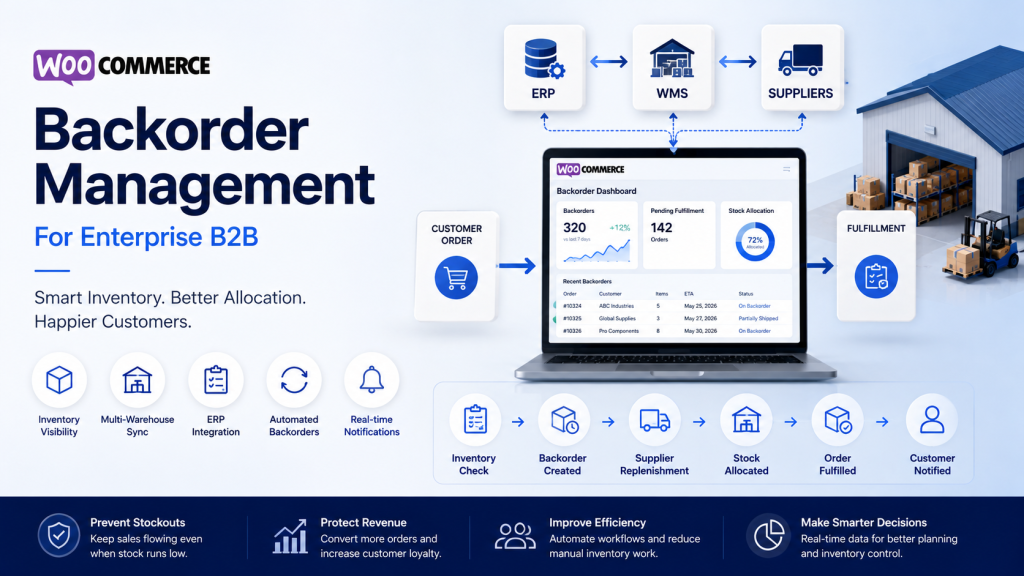
The ERP typically holds true cost, margin floors, and contract terms, which means quote pricing should read from the ERP rather than duplicating that logic inside WooCommerce. The CRM holds the relationship context, past deals, current opportunities, and the account owner, so a quote request without CRM visibility forces sales to work blind. The OMS governs what happens after acceptance, converting an approved quote into a fulfillable order without anyone re-keying line items.
A PIM, where one exists, keeps product data and configuration options consistent so a quoted configuration matches what the warehouse can actually build. Getting these systems connected matters more than picking the flashiest RFQ plugin, and the ownership questions involved are covered in more depth in our ERP vs CRM vs OMS comparison.
Why Most RFQ Projects Fail
Most RFQ failures are not caused by weak plugins. They are caused by treating a request for quote system as a form submission tool rather than a pricing and approval pipeline with real financial consequences.
The typical failure pattern starts with a quote form that works fine in a demo, then a few months of real usage where nobody defined who approves what, so every request routes to one overloaded manager. Response times slow down, deals go cold, and the business quietly reverts to email and spreadsheets, which defeats the purpose of automating the workflow at all.
The hidden cost compounds from there. Manual quotations without a system of record mean nobody can say with confidence what was actually promised to a customer, which creates disputes at invoicing and erodes trust with the accounts that matter most. Fixing this later costs more than designing the approval hierarchy correctly at the start.
RFQ Governance Framework
Governance determines who can quote what, at what discount, and for how long, and without it a quote workflow degrades the same way ungoverned pricing rules do.

Sales teams want the speed to negotiate live during a call. Ecommerce and finance teams want every quote traceable to an approved rule. The resolution is rarely a compromise on either side. It is a structured pipeline where reps submit proposed terms instantly, and approval happens automatically for anything inside pre-agreed thresholds, escalating only the exceptions that genuinely need a manager’s judgment.
Version control prevents a second common failure: two people editing the same quote and one overwriting the other’s terms without knowing it happened. Every revision needs a timestamp, an author, and a diff against the previous version, the same discipline used in software change management. Preventing pricing conflicts between a live quote and an updated contract price in the ERP requires locking a quote’s pricing at the moment of acceptance, so a mid-cycle cost update does not silently change what the customer already agreed to.
Scaling RFQs Beyond Large Catalogs
A quote workflow built for a few thousand SKUs often strains once a catalog grows past fifty thousand products, because request volume, product configuration options, and pricing rules all grow together. The practical fix is limiting which products even enter the RFQ path.
Low-value, standard-margin items should stay on instant checkout by default, with the quote workflow reserved for configurable, high-value, or contract-governed products. This keeps the review queue focused on requests that genuinely need a human decision, rather than burying sales teams in low-value quote requests that could have converted instantly.
Common RFQ Mistakes
Several patterns show up repeatedly across enterprise RFQ audits, and most are process gaps rather than technical bugs.
- Manual pricing decisions with no recorded rule or rationale
- No CRM integration, so reps quote without account history
- Slow response times that lose deals to faster competitors
- Weak customer segmentation, treating every buyer the same way
- Missing quote expiry dates that turn into open-ended liabilities
- Approval bottlenecks routed through a single person regardless of volume
- Inconsistent pricing between sales-issued quotes and system-generated ones
- No analytics on quote conversion, response time, or win rate
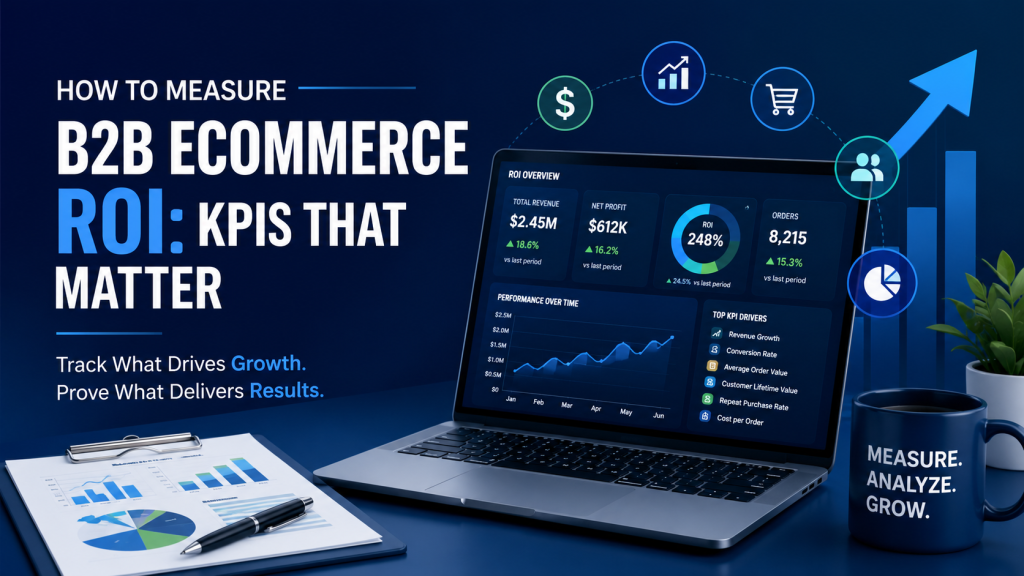
KPIs Every Business Should Track
Measuring an RFQ program the same way as instant checkout misses what actually matters in a negotiated sales cycle.
| KPI |
What It Reveals |
| Quote conversion rate |
Whether quotes are priced and handled well enough to close |
| Average quote value |
Whether the workflow is capturing the right deal sizes |
| Quote response time |
How quickly sales moves from request to first offer |
| Sales cycle length |
How long negotiation takes from request to acceptance |
| Approval time |
Whether the internal approval chain is a bottleneck |
| Repeat quote rate |
Whether the same accounts are re-quoting often, and why |
| Revenue per quote |
The financial weight each accepted quote carries |
| Customer lifetime value |
Whether quote-based accounts outperform checkout-only accounts |
How Dazzlebirds Approaches Enterprise RFQ Workflows
Every RFQ engagement starts with business discovery focused on how quotes are actually requested and approved today, not on which plugin looks most feature complete. That means sitting with sales, finance, and procurement to map the real process before touching any configuration.
Requirements analysis and procurement mapping follow, documenting approval thresholds, customer tiers, and the systems already holding pricing and account data. Architecture planning decides where pricing logic lives, how the ERP and CRM connect, and how a quote converts into an order without manual re-entry. Workflow design turns that architecture into the actual submission, review, and approval steps sales and finance will use daily.
An ERP assessment confirms what can be read in real time versus synchronized on a schedule, since quote pricing accuracy depends entirely on that answer. Customer journey mapping ensures the buyer experience stays coherent between quote request and final checkout, rather than feeling like two disconnected systems. Performance planning and security planning happen before launch, not after, covering realistic request volume and who can view sensitive margin data.
Testing focuses on the edge cases that break most RFQ systems: expired quotes, revised terms, and orders that split across multiple approvals. Deployment happens in stages tied to customer segments, and continuous optimization keeps the workflow aligned as product lines, approval rules, and account volume change over time.
Future of RFQ Workflows
AI-assisted quotation is already shifting how pricing recommendations reach sales reps, suggesting a starting offer based on account history and current margin targets rather than a blank form. Predictive pricing takes this further, flagging deals likely to need a discount before a rep even opens the request.
Customer self-service procurement is expanding what buyers can do without a rep at all. Known accounts can see contract pricing and submit standard requests instantly, while human review gets reserved for genuine exceptions rather than every order.
API-first and composable commerce architectures make this possible by treating pricing, approval, and fulfillment as separate services rather than one monolithic plugin. This separation is also what allows real-time ERP pricing to reach the quote workflow without waiting on a nightly batch sync.
Smart approvals and sales automation close the loop. Routine requests move on their own, and only genuine exceptions get routed to a human for judgment.
RFQ Readiness Checklist
Before scoping a build, it helps to confirm the business has answers to the questions that determine whether an RFQ system will hold up under real volume.
- Is there a named owner for pricing approval at every discount threshold
- Does every quote get an expiration date by default, with no manual exception
- Can the CRM show a rep the account’s full history before they respond to a request
- Is pricing read from the ERP or duplicated and maintained separately inside WooCommerce
- Do low-value, standard-margin products bypass the quote workflow entirely
- Is there a version history for every quote revision, with a timestamp and author
- Can the team currently report quote conversion rate and average response time
A business that cannot answer most of these today is not failing at RFQ automation. It simply has not yet built the governance layer that makes automation safe, and that layer matters more than any single plugin decision.
Conclusion: Key Takeaways and Next Steps
A WooCommerce quote request system works when it is built as a governed pricing and approval pipeline, not a contact form with a product list attached. The businesses that get real value from RFQ automation define ownership for every approval, connect pricing to the ERP rather than duplicating it, and track the workflow with KPIs instead of assuming it is working.
The practical starting point is an honest look at the current process: how quotes move today, who approves what, and how long that takes. From there, the decision framework is straightforward. Route low-value, standard items to instant checkout, reserve the quote workflow for negotiated and configurable products, and build the approval hierarchy before choosing a plugin. Architecture and governance determine whether an RFQ system holds up at scale far more than any single feature does.
FAQs
It is a workflow allowing B2B buyers to request custom pricing on selected products instead of paying a fixed price, with sales or pricing teams reviewing and returning a formal quote before an order is placed.
Coupons apply a predefined rule to everyone. An RFQ involves human review, negotiation, and approval, producing a price specific to one buyer's request and account context.
Only if pricing genuinely varies by customer or negotiation. Stores with a handful of custom accounts often manage fine with manual overrides instead of a full RFQ system.
Yes, and it should. Reading cost and contract data directly from the ERP keeps quoted prices accurate and prevents WooCommerce and the ERP from disagreeing on the same customer's terms.
Missing governance, not weak technology. Undefined approval ownership, no quote expiry rules, and no audit trail cause far more failures than any plugin limitation.
It depends on cost volatility, but every quote needs an explicit expiration date. Open-ended quotes create pricing liabilities once underlying costs or contracts change.


 WooCommerce Solutions
 Solutions for WordPress