Introduction
If you want your website to rank not only on Google, but also on AI-powered platforms like Gemini and Perplexity and ChatGPT, you need to understand Answer Engine Optimization (AEO) – The Future of SEO in 2025. If you have ever typed a question into Google and immediately seen the answer at the top, you have already seen Answer Engine Optimization in action. These days, people do not just search online, they expect fast, clear answers from AI tools like ChatGPT, Google’s AI overviews, or voice assistants like Alexa and Siri. AEO is still a new idea, but it is growing rapidly. As AI chatbots become the main way people find information, AEO is starting to replace traditional SEO. It’s no longer just about ranking on a page – it’s about the response people get. For businesses and marketers, AEO is a huge opportunity. Done right, it can increase your visibility, build trust in your brand and bring in the right audience – people who are actually looking for what you have to offer.
I remember when I first started doing SEO – it was all about keywords and backlinks. That was the motto. But then, one of my articles came across as a featured snippet, and I heard it read aloud by a voice assistant. Then I realized the rules had changed. People are not just typing words anymore—they are asking questions. And the answer engine is delivering those answers directly.
With Answer Engine Optimization, SEO experts now optimize not only for clicks, but also for AI assistants, voice search and zero-click answers. The goal is to confirm that your content can be simply consumed and discovered by AI tools. Welcome to the world of Answer Engine Optimization (AEO) – where your goal is not just to show up in search results, but to be the answer.
In this guide, we’ll explain what AEO is, how it differs from SEO and GEO, why it’s important in 2025, and most importantly, how you can optimize your content to answer what people and AI are searching for.
What Is Answer Engine Optimization (AEO)
Answer engine optimization means setting up your content so that AI tools can provide fast or clear answers to people’s questions. Instead of focusing on keywords, AEO focuses on the questions people ask and provides clear, simple-to-understand answers. AEO uses things like schema markup, structured data, and natural language processing to help AI and search engines understand your content faster. Unlike old-style SEO, which generally involves ranking pages based on clicks, AEO involves creating a real response so that your content is displayed by artificial intelligence systems.

AEO vs. SEO vs. GEO: Understanding the Differences :
| Aspect |
AEO |
SEO |
GEO |
| Goal |
Provide a direct answer in AI |
Rank pages for user clicks |
Ensure clarity in AI-generated content |
| Focus |
Structured, short content |
Backlinks and Keywords |
Brand mentions in AI outputs |
| Platform |
Google AI, Siri, Alexa and ChatGPT |
Bing, Google |
Perplexity and ChatGPT, Gemini, |
| Optimization |
Answer-focused content and schema markup |
Keywords, meta tags, and backlinks |
Content relevance, authority signals |
Why AEO(Answer Engine Optimization) Important in 2025
Search has moved from “10 blue links” to direct answers. Google’s AI capabilities and other answer-based systems now summarize, create & display content in real-time, sometimes without a click. That means brands need to compete increasingly as source content for AI answers to maintain visibility, brand mentions and referral traffic. 2025 reports and industry guides state zero-click trends and declining organic clicks as AI summaries become the norm. With 65% of different Google searches resulting in zero clicks, AEO has become critical to visibility. AI algorithms now service well-formatted, confident content for reference, even if that content is not the top answer in classical SERPs. Brands can now bypass the conflict by being the best answer regardless of domain expertise.
In short, even if your page is #1 in organic search, AI answer engines will sometimes reply to a user with a synthesized snippet from other sources, so you want to be one of those sources they rely on.

What is the difference between SEO and AEO?
SEO(Search engine optimization) : Search engine optimization continues to optimize pages for search engine results pages for clicks and searches. It covers many methods, such as on-page optimization, link building, and technical improvements to functionality and website design.
AEO(Answer Engine Optimization): AEO maximizes staying within AI responses that prioritize short, well-organized, confident copy and value multiple prompts. Rather than just aiming to hit keywords, AEO targets exact queries. These are questions and will aim to provide the most related, shortest possible answer.
• Imagine that SEO is about optimizing “visibility on the results page” and AEO is about optimizing “inclusion” in response.
Step-by-Step Guide: How to Do Answer Engine Optimization in 2025
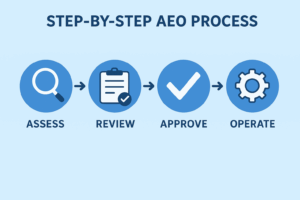
Step 1: Keyword Research in the Right Way
Use tools like Google Keyword Planner, Ahrefs and Ubersuggest to find long-tail keywords and semantic phrases like:
• How to rank blogs with AI tools
• AI content ranking
• ChatGPT SEO Tips 2025
Combine this with your main keyword — Answer Engine Optimization to create content readable by humans & AI
Step 2: Write High-Quality content, Human-written Content
AI prefers to read structured and human-written content. Short, human and answer-focused sentences.
• Begin with short definitions.
• Add a short summary for AI snippets.
• Use bullet points, examples and real cases.
Example: If you provide answer engine optimization services, explain how your approach has increased visibility on Confusion or Gemini in a case study.
Step 3: On-Page SEO for AEO
• Meta title: Put “Response Engine Optimization (AEO)” at the beginning.
•Meta description: Write in natural language and include “AI search optimization” or “AI-powered search visibility”.
• Heading: Use H1 for top topics and H2/H3 for sub topics.
• Alt Text: Tag images with your target keywords.
Internal Linking: Links to other similar DazzleBirds articles.
• External linking: Site confident sources.
Step 4: Optimize for Voice Search and AI
AI engines love FAQs, structured data and how-to articles.
• Add FAQ and conclusion.
• Use structured data AEO for high results.
• Write for voice search optimization in a informal style.
Tip: Limit answers to 40-60 words for Google’s snippet and AI mode inclusion in ChatGPT results.
Step 5: Promote Your Content
Promote your AEO-optimized blog on:
• Twitter, LinkedIn, Reddit Conversations around AI search.
• Email newsletters for marketers and creators.
• Backlinks from marketing and AI blogs.
Backlinks enable Google’s AI to trust your domain, increasing AI search visibility.
Step 6: Technical SEO Basics
• Confirm fast loading speed and mobile-friendliness.
• Include SSL for ranking and trust.
• Include robots.txt and sitemap.xml for crawling.
• Compress media and include loading for speed.
A technically solid site is more likely to look in an AI-powered answer box.
Step 7: Update Regularly and Monitor
Use Google Analytics, Perplexity and Search Console notifications to determine whether your content looks in AI answers.
Update your blog every 3-6 months.
Examples, FAQs and AEO vs SEO comparisons will be applicable in 2025
Core AEO(Answer Engine Optimization) strategies you should implement in 2025
Below are working strategies you can implement directly.
1. Answer-first content
Create brief, clear answers at the top of pages before longer explanations. AI Algorithms like this to pull answers from a brief first paragraph. Use bullet points and step-by-step sequences for procedural questions.
2. Structured data aggressively/ Utilize plan
Schema (QAPage, FAQ, How To, Product, Article, Organization) helps machines understand relationships and entities key cues to be cited in an AI response. Supply machine-readable facts (authorship, ratings, dates).
3. Establish interesting authority (E-E-A-T)
The AI answer engine selects sources that prove experience, expertise, reality and trustworthiness, particularly for YMYL questions. Publish an author biography, cite primary sources, and keep a track record of correct content.
4. Optimize for conversational voice and queries
Humans formulate voice/AI questions differently. Create natural question headings (H2/H3) and answer them simply. Short sentences and direct words help voice helpers convey your answer.
5. Employ clear Q&A and FAQ blocks
FAQ structured and schema Q&A sections increase your chance of being picked as a direct answer. Put a direct question title, followed by a 1-2 sentence answer, then a long explanation.
6. Citations are perfect and keep facts
AI models find things they can attribute to. When you cite figures or statements, cite original reports, scholarly papers, or authoritative resources. It considers more trust signalling models and detection functions.
7. Long versions and Support short
Deliver direct short answers (for AEO) and expandable long-form articles. It maximizes the likelihood of becoming both a cited answer and a ranking page.
8. Track and optimize for “zero-click” metrics
Monitor impressions, clicks in Search elsewhere and Console. If impressions are up but clicks are down, it’s possible you are showing up in AI summaries a new visibility stream you should be optimizing for.
Tools & resources to help you implement AEO(Answer Engine Optimization)
- Google Search Console — Track impressions, Queries, and CTR.
- Schema Validators — Test structured data implementations.
- AI Answer Engine for Testing –Perplexity, Bing Copilot, Ask ChatGPT, Google AI mode to see if and how your content appears.
- knowledge platforms and Content experience— to find topical gaps and answer opportunities.
Measurement: KPIs that matter for AEO(Answer Engine Optimization)
- AEO(Answer Engine Optimization) wants to include answers, so your KPIs must cover:
- Mentions / Citations in AI Answers (if you can measure it with brand tracking or tools).
- Impressions vs clicks within the search console (zero-click signal).
- Brand/URL documents from AI answer engines (where platform analytics allow).
- People Also Ask / Knowledge Panel Appearances/ Featured Snippets.
Note: Some AI tools do not provide clear referral logs, so third-party brand monitoring and manual verification of tool output (ChatGPT, Bing Chat and Perplexity,) are used.
Why Is Achieving AEO (Answer Engine Optimization) Status So Challenging?
Answer Engine Optimization (AEO) sounds exciting, but it has some major challenges.
Let’s discuss them in plain English.
1. Monitoring Performance
When we talk about Search Engine Optimization (SEO), we have tools like Google Search Console, Semrush and Ahrefs to monitor the results. In the case of AEO, there are not various consistent monitoring tools available.
2. Finding Internal Buy-In
- Another challenge is convincing your management or staff to invest in AEO.
- AEO is not an extra for SEO – it is an extra function. That means you’ll possibly need more time, money, and resources to make it a success.
- What you will need there is real communication.
- Present information that shares a story. For example, Gartner expects that organic search traffic will decline by 25% by 2026. You should ask:
- What percentage of your income is currently from organic search?
- If traffic is declining, how will you make up for lost income?
- Does your brand have a presence on other engines such as LinkedIn, YouTube, or third-party sites?
- AI-based assistants such as Meta AI and Claude are initial as new channels through which users are attractive and discovering with brands. If your company is not being talked about by such engines, you can become invisible to buyers.
3. Optimizing for Different Answer Engines
With SEO, most of the focus is on Google. But AEO (Answer Engine Optimization)is about optimizing for different AI systems, such as:
• The cloud
• Microsoft Copilot
• Gemini
• ChatGPT
• Confused AI
• Meta AI
Each engine is different and downs information in a different way.
For example, Microsoft Copilot is based on ChatGPT technology, so they are like, but Gemini has a completely different configuration. Therefore, SEOs have to learn how to optimize for different platforms simultaneously. Also, expectations are changing. Google is pushing for helpful, original content and high-quality, and Answer Engine takes this even further. They give exact, clear, and insightful answers, not vague tips like “write a good title tag.”
To succeed in AEO, you’ll need to create content that is unique, detailed, and directly answers users’ questions in a natural, informal way.
The Future of Answer Engine Optimization (AEO)

While we are getting a solid sense of how AEO(Answer Engine Optimization) works, it’s subject to. To stay one step ahead, here are a few possible trends to keep on your radar. Agencies should optimize content for AI-native discovery, social media platforms, and community-based channels. AI responses may start blending in visuals like images, charts, video, and audio. Make client content optimized, labeled properly, and findable for engines to pull into hybrid-media responses Engines can prefer fresh, frequently updated content over old evergreen posts. This is already included in existing search engine optimization practices, so it’s just upkeep. With the increasing volume of training data, AI models are getting better at generating direct answers, assessing authority, and keeping correct information distribution. Source, author information, and good brand signals will have more visibility over time with the right content.
Conclusion
Answer Engine Optimization (AEO) is the future of online marketing. While AI technologies like ChatGPT, Gemini, and Perplexity are changing the nature of how humans search, AEO makes your brand visible and clear. As we discussed, search is no longer about blue links. It’s about the answers. Fast ones. The right ones. The kind that appear in AI extracts, voice search results, and chat surfaces without a single click. That is the reality of 2025. And that’s where your activity should lead.
Here’s the best part: you do not have to change everything. All you need to do is change your content plan from “Ranking Pages” to “Owner Answers”. It’s about shaping the way people behave in the SERPs and providing as much value upfront as possible.
FAQs
Ans: AEO(Answer Engine Optimization) is optimizing content for AI-based systems such as ChatGPT, Google's Gemini and AI mode that provide direct answers instead of old-style links.
Ans: They work together SEO brings clicks, AEO(Answer Engine Optimization) brings visibility within AI-generated answers.
Ans: Google NLP API, Ahrefs, AnswerThePublic.
Ans: AEO(Answer Engine Optimization) helps your content show up for query-based searches, increases your chances of looking in voice search results, improves visibility, builds drives and brand trust more targeted traffic to your site.


 WooCommerce Solutions
 Solutions for WordPress