You asked a developer for a quote. They said $15,000. Your neighbor’s kid said he’d do it for $500. Now you’re confused, doubtful, and have no idea who to trust.
Welcome to the world of WordPress development pricing, where numbers are pointless until someone actually explains them.
That’s what this guide does.
No recycled advice. No “it depends” cop-outs. Just a straight, no-bull breakdown of what it actually costs to get WordPress development cost in 2026 and beyond, why the price gap is so freaking big, and how to ensure you’re not overpaying—or worse yet, underpaying for something that’s going to set you back two times more.
Read this once. Walk into every developer conversation with full confidence.
Why WordPress Still Dominates in 2026
Before we dive into the bottom line, let us briefly touch on why WordPress is still the platform of choice among businesses around the world.
From all the websites on the internet, more than 43% rely on WordPress. That number has not decreased — it’s increased. The platform continues to develop, the ecosystem is huge, and there’s nothing like it for flexibility. Blogs, eCommerce shops, car sites, and enterprise-range platforms.
As a result, this is precisely why knowing what WordPress development cost in 2026 matters now more than ever. The demand is high, there’s competitive talent in the field, and pricing has also changed as the platform matured.
What Actually Influences WordPress Development Cost in 2026
How Much Should Every WordPress Website Cost? That may seem obvious, but many expect a flat rate. The reality is a number of factors pull the price up or down. Here’s what you need to know:
1. Type of Website
A simple informational site for a local business is a world away from a custom eCommerce storefront or a SaaS landing page with API integrations. In 2026, the WordPress development cost in 2026 is directly high to the website’s complexity.
- Simple brochure site: Low complexity, few pages, little customization.
- Custom design business website (complexity level—mid, custom theme, contact forms set up, SEO setup)
- Setting up an eCommerce website: WooCommerce, payment gateways, products, and inventory
- Membership or subscription site: User roles and gates, payment integration, CRM connections.
- Enterprise solution: Custom development infrastructure, integration with third parties, enhanced security levels, and scaling plans.
A custom solution or premium theme that you customize is far more economical than developing a custom theme from the ground up. However, if uniqueness and performance are in demand for your brand, custom development pays off. A custom design usually raises the WordPress development cost in 2026 but allows for complete ownership, faster load times, and no theme bloat.
3. Plugins and Integrations
One of the most powerful things about WordPress is its plugins. But each plugin needs to be configured, checked for compatibility, and, in some cases, customized. If you need CRM integrations, email marketing tools, booking systems, or custom APIs, those add time and cost.
4. Who Builds It
This is the biggest factor. You have three main options:
Freelancers: Cheap, flexible, and good but, however, inconsistent.
Agencies or WordPress development companies: A high charge, but organized confines, accountability, and full-stack prowess.
Internal developers: Costly long-term when considering salaries, benefits, and training.
5. Location of the Development Team
A developer based in Eastern Europe or South Asia usually costs much less per hour than a US-based or UK-based developer. That being said, cost isn’t the sole deciding factor. They care about a lot more than experience, communication, and portfolio.

WordPress Development Cost in 2026: The Real Numbers
Let’s talk actual pricing. These ranges reflect current market rates based on project type and who you hire.
Basic WordPress Website
Cost range: $500 – $3,000 Timeline: 1–3 weeks What’s included: a pre-built or lightly customized theme, up to 5-8 pages, a contact form, basic SEO setup, and mobile responsiveness.
This level is common for freelancers or small agencies working on basic projects. If you only need a basic online presence and your needs are straightforward, this can work.
Mid-Range Business Website
Cost range: $3,000 – $10,000 Timeline: 3–8 weeks What’s included: semi-custom or fully custom design, 10–20 pages, minimal form design including advanced features (i.e., conditional logic), on-page search engine optimization (SEO), speed optimization, limited third-party integrations
This is the most common tier, for growing businesses that want a professional web presence without all the trappings of an enterprise-level solution. Most SMB clients will find a good range for them is under this amount with a WordPress development company.
eCommerce Website (WooCommerce)
Cost: $5,000 – $25,000+ Timeline: 6–16 weeks What it includes: Complete WooCommerce installation and configuration of specialized product pages, a payment gateway, shipping settings, inventory management facilities, coupon systems, and sometimes even custom plugins.
The range is broad because the complexity of eCommerce can differ radically. A 20-item store is a world away from a 2,000-product catalog with multiple currencies and integrations across warehouses.
Custom Enterprise WordPress Platform
Cost range: $25,000 – $100,000+ Timeline: 3–9 months What you’ll get: fully custom themes and plugins built from the ground up; headless WordPress options with multi-site setups or advanced security/performance infrastructure to meet enterprise-level needs; potential for client dashboards and full QA testing.

How to Reduce WordPress Development Cost Without Sacrificing Quality
Every intelligent business owner asks this question. And the best part is—yes, you can save on your WordPress development cost in 2026 without a slow, broken, or just embarrassing site. You only have to know where it is safe to cut and where it definitely isn’t.
Start with a clear scope.
Scope creep is the number one cause for projects to go over budget. The cost rises every time you add a feature in the middle of the project. Before you approach any WordPress development company, jot down precisely what you need—how many pages, core features, integrations, and launch timeline. A tight brief also keeps quotes accurate and timelines honest.
Choose the right theme strategy.
Not all websites require a completely bespoke theme developed from scratch. If your brand guidelines are not rigid, starting with a solid coded off-the-shelf premium theme and customizing it will save you thousands of dollars without compromising on quality. A competent WordPress development company will be upfront in guiding you on which approach is right for your project and whether it should be custom or customized.
Prioritize features for phase one.
Not all features need to be available on day one. Product — Start Lean Launch your core functionality—the pages, forms, and flows that directly generate leads or revenue. High-level features such as member portals, booking systems, or complex integrations should be phase two once the business is producing returns. This snippet of code saves 2026 dollars on your first WordPress development.
Don’t skip quality hosting.
Cheap hosting seems like a money saver until you have the site go down during peak traffic or get hacked due to zero security infrastructure. The $50–$100 you should be investing each month in managed WordPress hosting saves you far more on emergency fixes and lost business later.
Hire for value, not just price
If you recruit WordPress developers purely on the basis of price, then you usually end up paying twice: once for a budget build and again for an expert to repair it. Investing slightly more from the beginning on seasoned WordPress development services can virtually always save you money in the end.
The most intelligent companies don’t cut your WordPress budget—they invest it in the right places.
Hourly Rates by Developer Type in 2026
Instead of a fixed project fee, projects may be billed on an hourly basis. The current market rates are as follows:
- Freelance developer (beginner): $25 – $50/hour
- Freelance developer (experienced): $60 – $120/hour
- WordPress development agency (US/UK): $100 – $200/hour
- WordPress development agency (South Asia/Eastern Europe): $30 – $75/hour
And while you hire WordPress developers through an agency, most of the time, you’re getting a team (designer, developer, and project manager)—not just one person. So agency pricing sometimes makes more sense dollar-for-dollar.
Should You Hire a Freelancer or a WordPress Development Company?
This question divides opinions. Let’s be real about both sides.
Freelancers work well when:
- Your project is small and clearly scoped
- You have someone internally to manage the project
- You’ve worked with this person before or have strong referrals
- Budget is tight and timeline is flexible
A WordPress development company makes more sense when:
- You want end-to-end ownership—design, development, testing, launch
- You need WordPress development services that go beyond just coding (strategy, SEO, performance)
- You want accountability and a structured process
- You’re building something that needs to scale
The WordPress development services at Dazzlebirds are designed to provide businesses with a full-service experience—from discovery all the way through deployment. You don’t just get code. You receive a working product that advances your business goals. Here are their WordPress development services: https://dazzlebirds.com/service/wordpress-development-services/
WordPress Development Cost in 2026: Hidden Costs People Forget
Many businesses are taken aback by this. You’ll spend more than just the initial quote. This is what is frequently ignored:
Domain and Hosting
A domain costs $10–$20/year. Hosting costs are between $5/month (shared) and $300+/month (managed WordPress like Kinsta or WP Engine). For quality hosting, most professional projects should plan on spending at least $30–$100/month.
SSL Certificate
Most quality hosts include this now, but some don’t. Always confirm.
Premium Plugins and Themes
Premium plugins, such as page builders, SEO tools, form builders, and security plugins, frequently have yearly license costs if your project uses them. Depending on your stack, set aside $200 to $800 annually.
Content Creation
The cost of WordPress development in 2026 is seldom for copywriting or photography. To create content that can be its own line item in your budget.
Post-Launch Maintenance
Websites need to be updated—core, themes, and plugins. Security patches, backups, uptime monitoring. Allocate time from your team or hire someone for ongoing maintenance. Have a budget of $50–$300/month for a basic care plan.
SEO and Performance Optimization
Launching a website is different from ranking it. So if you want to be found by Google, budget for technical SEO, speed optimization, and content strategy.
How to Get the Most Value When You Hire WordPress Developers
Smart businesses don’t just look for the cheapest option. They look for the best value. Here’s how to approach that:
- Define your scope clearly before you get quotes. Vague briefs lead to vague pricing and blown budgets.
- Ask for case studies and references. Any serious WordPress development company will have proof of their work.
- Understand what’s included in maintenance. Will they hand you the keys after launch and disappear? Or is there an ongoing support plan?
- Prioritize communication. When you hire WordPress developers, assess how they respond to your initial inquiry. That tells you a lot.
- Look for SEO-aware developers. A developer who understands Core Web Vitals, clean markup, and page speed is worth more than one who just gets the design right.
Why WordPress Development Cost in 2026 Is Worth the Investment
When they hear quotes that exceed $5,000, some business owners become hesitant. This is the helpful perspective shift:
Your website serves as your 24-hour sales representative. It never calls in sick, never sleeps, and never requests a raise. A $10,000 website that brings in $50,000 in leads in its first year is a machine, not an expense.
WordPress development cost in 2026 can only be judged in terms of the yield it’s supposed to cover. If you’re doing proper design, solid development, and smart SEO, the pay-off window is typically 6–18 months for most businesses.
And the attempts to save $2,000 up front by cutting corners lead to having to rebuild the site 18 months later because it’s slow, insecure, or unable to scale. That double spend stings, far more than the initial investment.
What to Look for in WordPress Development Services in 2026
They’ll ask questions and provide a quote. Then if someone throws a number at you in 5 minutes, with no knowledge of all the above, they haven’t really understood what you need.
Performance and SEO — they are not an afterthought. They aren’t afterthoughts — they should be baked into the build.
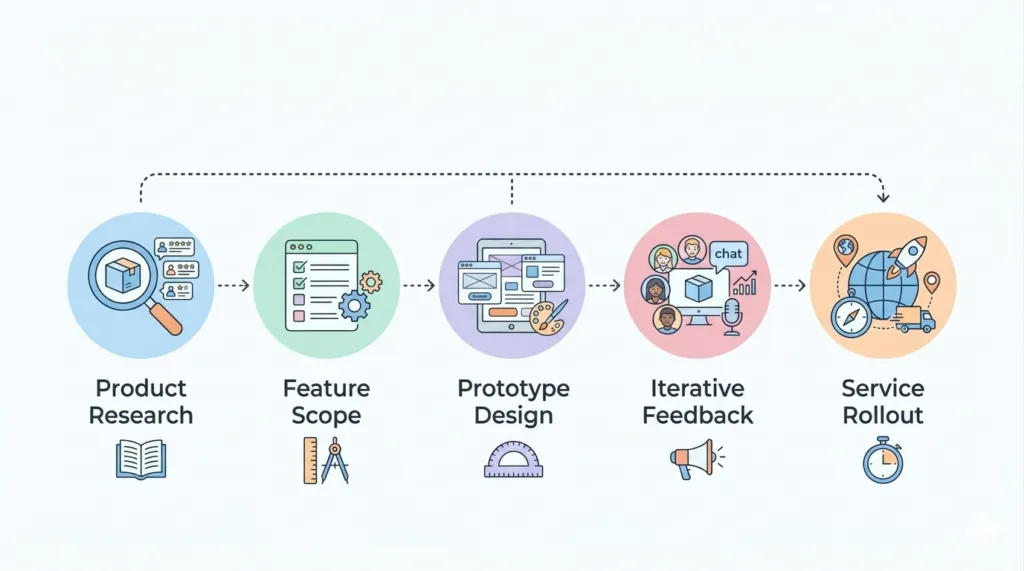
They have a clear process. Discovery → wireframes Collection → design Development → testing Launch support
They’re transparent about third-party costs. Hosting, plugins, licenses—this should be discussed up front, not sprung on you later with a surprise bill.
Final Thoughts: WordPress Development Cost in 2026.
Here’s the summary version:
- Simple website: $500 – $3,000
- Professional business site: $3,000 – $10,000
- eCommerce: $5,000 – $25,000+
- Enterprise: $25,000 – $100,000+
The WordPress development cost in 2026 really comes down to what you want, who you hire, and how well-defined your project is. What is expensive can be “cheap” in the long run. Making the right investment at the start pays dividends both in performance and rankings, driving revenue.
If you care about building something that’s going to be effective for your company, then only ven consider the lowest bid. Find a partner that understands and knows how to help you reach your goals.
Dazzlebirds are professional WordPress development services, helping businesses that seek results—not just a website. Whether you are starting from scratch or require a complete rebuild, their team brings strategy, design, and technical expertise—all in one place.
Explore their WordPress development services here: https://dazzlebirds.mystagingwebsite.com/service/wordpress-development-services/
The right website isn’t a cost. It’s your best business decision.
FAQs
The average WordPress development cost in 2026 for a small business website ranges between $3,000 and $10,000 depending on design complexity, number of pages, and required features.
Hiring WordPress developers from an agency gives you structured delivery, accountability, and full-stack expertise. Freelancers work best for smaller, clearly scoped projects with flexible timelines and tighter budgets.
Beyond the quoted price, expect additional costs for domain registration, hosting, premium plugins, SSL certificates, content creation, post-launch maintenance, and ongoing SEO optimization that most developers never mention upfront.
A professional WordPress development company typically takes three to eight weeks for a business website. eCommerce stores take six to sixteen weeks. Enterprise platforms can take three to nine months.
Look for WordPress development services that ask questions before quoting, show proven case studies, discuss SEO from day one, follow a clear process, and are fully transparent about third-party costs.


 WooCommerce Solutions
 Solutions for WordPress