The Future of WordPress: What to Expect in 2026 and Beyond
Introduction
WordPress now powers roughly 43% of all websites worldwide, more than 590 million active sites, and still commands over 60% of the CMS market outright. That kind of scale is exactly why the future of WordPress matters: with WordPress 7.0 shipping new AI infrastructure, Google changing how Core Web Vitals are scored, and plugin security incidents making regular headlines in 2026, understanding where the platform is headed helps you make smarter decisions today instead of playing catch-up later.
In this guide, we look at what has actually changed in the future of WordPress so far in 2026: AI in core, mobile-first performance under Google’s new scoring rules, security and privacy, site performance, e-commerce, and headless WordPress. We will also cover what each shift means for your website in practical terms.
Why the Future of WordPress Still Matters in 2026
WordPress has grown from a simple blogging tool into a full content platform that runs everything from small portfolios to enterprise storefronts. That scale is exactly why the future of WordPress matters: changes to the core platform ripple out to hundreds of millions of sites, plugins, and businesses that depend on it every day. Staying current with these shifts is part of keeping any WordPress site competitive.
AI Is Now Built Into WordPress Core
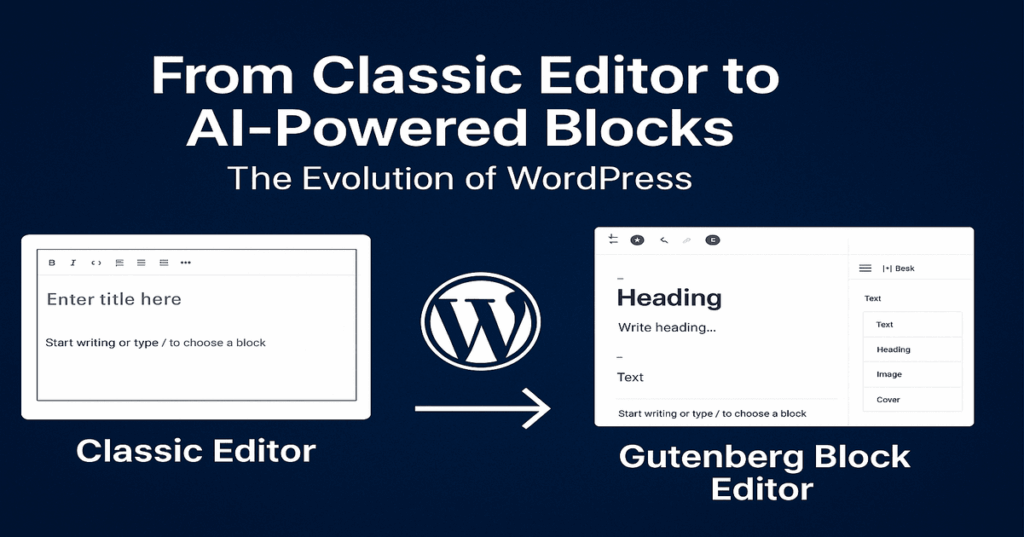
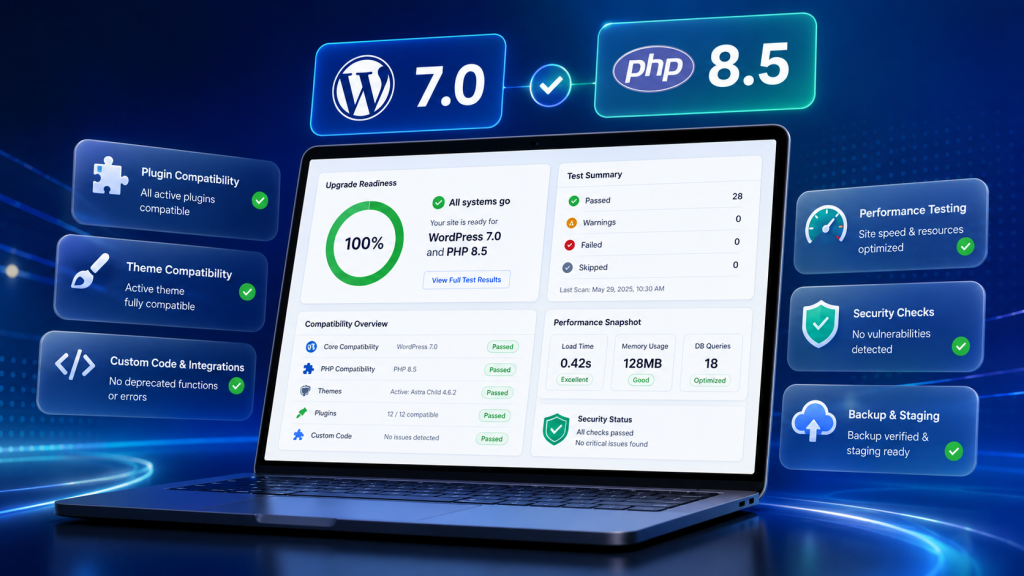
WordPress 7.0, released in May 2026, shipped a provider-agnostic AI Client built directly into core, with ready-made connectors for OpenAI, Anthropic, and Google. WordPress itself still doesn’t ship a built-in AI writer, but the new AI Client gives plugin developers a standard way to plug AI features into the dashboard: generating alt text, drafting excerpts, suggesting titles, and building assistant-style tools without every plugin reinventing its own integration.
SEO plugins already lean on this kind of AI assistance for writing titles, meta descriptions, and alt text, a preview of how deeply AI is likely to get woven into everyday WordPress workflows over the next few releases. If you are new to search optimization altogether, our SEO for beginners guide covers the fundamentals these AI tools are built on top of. WordPress 7.0 also shipped an MCP (Model Context Protocol) Adapter, which turns a WordPress site into a programmable environment that AI agents can interact with directly, a meaningful shift for AI-assisted publishing and automation.
Mobile-First Design Remains Non-Negotiable
Mobile traffic continues to make up the majority of visits to most WordPress sites, and Google has long prioritized mobile-friendly pages in search results. A site that loads slowly or renders awkwardly on a phone loses visitors before they ever see the content.
At DazzleBirds Web Solutions, mobile optimization is a standard part of every WordPress build we deliver: responsive layouts, compressed images, and clean navigation that works with a thumb, not just a mouse. Starting with one of these best WordPress themes for business gives you a strong, mobile-ready foundation to build on.
Security and Privacy: Raising the Bar
Security concerns around WordPress are not hypothetical in 2026. Plugins accounted for 96% of CMS-related vulnerability disclosures this year, with researchers tracking 250+ new plugin vulnerabilities a week, 43% of them exploitable without authentication. Notable 2026 incidents included a critical remote-code-execution bug in Everest Forms Pro (CVSS 9.8), an authentication-bypass flaw in Burst Statistics that exposed more than 200,000 sites to full account takeover, and a supply-chain attack that compromised Gravity Forms’ distribution infrastructure and knocked more than 25 plugins offline in a single day.
None of this means WordPress core itself is insecure, it means the plugin ecosystem is the primary attack surface. Regular updates, trimming unused plugins, and sourcing extensions only from reputable developers remain the simplest ways to stay off these lists.
The WordPress Plugin Ecosystem Keeps Expanding
The plugin marketplace shows no signs of slowing down, and new categories keep emerging around AI content tools, headless setups, and advanced e-commerce features. That growth is exactly why the vetting habits above matter more each year: more plugins means more surface area, so site owners need to be more selective about what they install to avoid both bloat and risk.
Headless WordPress Goes Mainstream
WordPress 7.0 formalized a lot of what headless developers had been bolting on themselves. WPGraphQL was elevated to a canonical, officially supported plugin, and a new Abilities API replaced the JWT workarounds developers previously relied on for headless authentication. Combined with the new MCP Adapter, this is a meaningful step toward treating WordPress as a true API-first backend.
Headless setups paired with frameworks like Next.js or Astro can deliver four to ten times faster page loads than a traditional WordPress front end, which is why headless has moved from an experimental approach to a standard pattern for large content platforms and high-traffic publishers in 2026, a shift we cover in more depth in our guide to upcoming web design trends. For most small business sites, though, traditional WordPress is still simpler and perfectly sufficient. Headless mostly solves a scale problem that smaller sites don’t have.
Core Web Vitals and Site Performance
Google’s March 2026 core update changed the rules for Core Web Vitals in a way that matters directly for WordPress. Scores are no longer graded purely page by page: Google now aggregates performance data across your whole domain, so a handful of slow templates can drag down pages that individually pass every threshold. LCP, INP, and CLS are also now weighted equally, so a poor interaction score hurts as much as a slow paint time. As of late 2025, only about 44% of WordPress sites passed all three metrics on mobile, trailing Shopify, Wix, and Squarespace, which makes site-wide performance work one of the highest-leverage things a WordPress site can still fix in 2026.
WooCommerce and the Future of WordPress E-Commerce
WooCommerce’s 2026 releases show where e-commerce on WordPress is headed. WooCommerce 10.8 (May 2026) focused on storefront performance and WordPress 7.0 readiness, and WooCommerce 10.9 (June 2026) followed with a leaner checkout flow, built-in transactional email logging, and the first canonical WooCommerce Abilities for querying and updating products and orders, laying the groundwork for AI agents and automation tools to interact with stores directly. An experimental GraphQL API is also in testing for developers on PHP 8.1 and newer.
For store owners, the practical takeaway hasn’t changed: keep WooCommerce and its extensions updated, since each release tends to close performance gaps and security holes as much as it adds new capability.
What This Means for Your Website
The future of WordPress in 2026 is not about one single breakthrough feature. It is the combination of AI infrastructure landing in core, stricter and more holistic performance scoring, a genuinely risky plugin landscape, and a growing push toward headless and API-first architecture. Sites that keep pace with these shifts tend to perform better in search, convert more visitors, and cause fewer headaches down the road.
Conclusion
Keeping up with the future of WordPress does not require overhauling your site every year. It means paying attention to the changes that actually affect performance, security, and user experience, and updating accordingly. If you would rather have a team handle that for you, DazzleBirds Web Solutions can help keep your WordPress site current, fast, and secure.
FAQs
WordPress 7.0, released in May 2026, added a provider-agnostic AI Client to core along with an MCP Adapter that lets AI agents interact with a site directly. WordPress still powers roughly 43% of all websites worldwide, so these changes affect a huge share of the web.
WordPress core remains secure, but plugins are the main risk: they accounted for 96% of CMS-related vulnerability disclosures in 2026, with 250+ new plugin vulnerabilities found weekly. Keeping plugins updated and minimal is the best defense.
Usually not. Headless WordPress paired with Next.js or Astro can load 4 to 10 times faster, but that complexity mainly pays off for large, high-traffic publishers. Most small business sites do fine with a well-optimized traditional WordPress setup.
Google's March 2026 core update now aggregates Core Web Vitals across your whole domain instead of grading pages individually, and weighs LCP, INP, and CLS equally. Only about 44% of WordPress sites currently pass all three on mobile.


 WooCommerce Solutions
 Solutions for WordPress