[dazzelbird_pdf_button]
Introduction
The modern web is about speed and performance. Users hope that the pages should be loaded immediately, and Google Award sites that provide rapid, reliable experience. But such as websites become more complex – dynamic materials, personal recommendations and heavy script -transcendent cloud hosting are not always enough.This is where the edge is in computing stages. By processing data close to the user, the age computing dramatically reduces delay and increases speed. For web developers and businesses, it means that user experience, strong security and a serious SEO advantage. This is the place where the web development service contains age computing. By moving the calculation and data storage close to the users, the edge computing reduces delay, improves performance, increases safety, and promotes SEOs. Instead of relying on a single centralized data center, developers now take advantage of the worldwide mini data centers (edge servers).
In Dazzlebirds, we help businesses adopt age computing strategies that distribute rapid, safe and more scalable websites. We will break all the things necessary to learn about edge computing in web development-from the benefits and safety benefits to the real world use matters and SEO effects. In Dazzlebirds, we help promote the brand in web development, which grow our sites in future and increase to provide lightning-fast performance worldwide.
In this blog, we will find out what the age computing is, how it benefits the web developers, and why it is becoming the backbone of Next-Jen web performance strategies.
What is Edge Computing in Web Development?
Edge is a way to handle computing data and run close applications to users, where users are always instead of sending requests to a large central server.
For web developers, it changes the game:
- Rapid material delivery: Website and apps can be cash (saved) on the edge server located near the user. This means low waiting and fast page load.
- On API and functions age: Instead of every action on a distant main server, small tasks and API calls run directly on these nearby servers.
- Better scaling: Workloads are spread in many shore locations, so a single cloud area is not overloaded.
How Edge Computing Improves Website Speed
When it comes to websites, the speed is everything. Users hope that the page will load immediately – if your site takes a few seconds long time, people leave. Studies suggest that even 100 milliseconds can reduce the conversion and hurt the user experience. Where Edge Computing comes.
Edge computing speeds up websites by bringing a server close to the user. Instead of sending each request to a central data center worldwide, servers kept in different fields handle the requests at the local level. This makes websites sharp, smooth and more reliable.
Here is how the edge increases computing speed:
1. How edge computing reduces latency
Late is the time when the data takes it to travel between the user’s device and the server. The longer the server is, the higher the delay.
• Without computing edge: Imagine a user in India that every click is trying to reach the website hosted in America. It can create 300ms or more delay, which users can feel as intervals.
• With edge computing: Website data is already available on a local age server in India.
Instead of going in half the way worldwide, the request is processed nearby, delayed to less than 50ms. Result? The page loads almost immediately.
2. Faster Content Delivery
Websites are not made of lessons only. They are packed with images, videos, CSS files and JavaScript – all of which take time to load. Without edge computing, every time a user travels, their devices have to bring these files from the original server (main hosting space). He slows down everything.
With edge computing, these static assets are cache (stored) on the age server close to the user. So instead of waiting for the files from all over the world, the users immediately distribute them from the closest edge server.
3. Improved Mobile Performance
Mobile internet can be unstable. The signal has ups and downs, the connection drops, and the data often takes longer to load. Edge helps in mobile performance by shortening the path of computing data. Because servers are geographically close, mobile users do not have to rely on long, delicate connections. It reduces buffering, prevents timeouts, and makes mobile browsing very fast and smooth.
Edge computing benefits for websites:
When people think about age computing, they usually think about speed. And while sharp websites are a very big win, the story has another side: security.
By bringing a server close to users and distributing the workload to many places, the edge computing does not just sharpen the sites – it also makes them safe. Instead of relying on a single, central data center to handle all requests, the age computing spreads and blocks the dangers before causing damage.
Let’s see some of the biggest security benefits of edge computing:
1. DDoS Mitigation
One of the most common attacks on websites is the distributed denial service (DDOS) attack. This occurs when hackers flood a server with fake requests, until it is overwhelmed until the site crashes.
• Without edge computing: All that traffic hits the main server at once, and if the server cannot handle it, your site goes offline.
• With edge computing: requests are filtered on the edge – close to the source of traffic. Identification of malicious requests, absorbed and blocked, before they reach the core infrastructure anytime.
2. Compliance & Data Privacy
- Without edge computing: All data can return to a central server, possibly in another country, which can cause legal risk.
• With edge computing: Data can be processed locally, on one edge server in the user area. This means that businesses remain in line with local privacy laws, while also improving speed.
3. Zero-Trust Security Models
Modern cyber security is moving away from the idea of ”reliable network”. Instead, the principle is the zero trust never believe, always verify. With edge computing, security policies can be applied to the edge layer, such as:
• Strict authentication: Sensitive data is encrypted before traveling.
• Filtering: malicious or suspicious requests are automatically blocked.
• Strict certification: Each request is verified before verifying.
This means that even if an edge server is targeted, the attackers do not automatically reach the entire system.
Edge Computing vs Traditional Cloud Hosting
| Feature |
Traditional Cloud Hosting |
Edge Computing |
| Latency |
Higher (centralized servers far from users) |
Lower (servers near users) |
| Scalability |
Vertical scaling (upgrade one server) |
Horizontal scaling (many small servers) |
| Security |
Centralized defense |
Distributed, multi-layer defense |
| Best For |
General workloads, small sites |
High-performance, global web apps, real-time app |
Key Edge use Cases for Developers
Edge computing is not only about speed or safety – it also opens new possibilities for developers. By transferring the workload close to the user, developers can create apps and websites that are much faster, smarter and more responsible than ever.
Let’s break some of the most exciting use cases:
1. Dynamic Content Rendering
Privatization is the heart of modern web experiences. Instead of serving the same stable page to all, developers can distribute customized materials on the straight edge.
• Imagine a shopping site that shows individual product recommendations based on browsing history. Instead of waiting for the main server to calculate the suggestions, the edge server can do it immediately.
• Real -time updates such as stock availability, localized pricing, or braking news can also be provided on the edge, ensuring that users always see fresh information.
2. Edge SEO Boost
Google fast websites, and core web vital (such as first contentful paint (FCP) and the largest contentful paint (LCP) play a big role in the SEO rankings.
Cashing the ingredients and running logic on the shore:
• Pages load rapidly, no matter where the user is.
• Search engine notice better performance and rank your site high.
• Better SEO means more traffic, which means more business.
3. Edge serverless Functions
Server -free tasks are already popular in modern development, but when they walk on the shore, they become even more powerful.
Examples include:
• Certification: Users logging in can be verified immediately at the nearest edge location, reducing the login delay.
• Redirects and Routing: Edge Funs can handle URL Redirect, A/B testing, or geolocation-based routing without touching the main server.
• Form Verification: For a distant origin rather than sending form data, verification can be locally on the edge, making the form snapier..
4. IoT & Real-Time Applications
Internet of Things (IOT) thrives at speed. Smart device – to cars connected to fitness trackers – requires to process data in real time. Sending each request back to a central server would be very slow.
With edge computing:
• A smart home device can process command (such as turning on the lights), instead of waiting on a server halfway worldwide.
• Important for a connected car safety, partitions with the side seconds in the nearby side can make decisions.
• Real-time apps such as chat platforms, gaming, or live dialect systems remain smooth and responsible for users everywhere.
5. Global E-commerce
One of the biggest challenges for the online store is to provide a consistent experience worldwide. A customer in New York and a customer in Tokyo should see both fast page load and smooth checkout.
Edge computing makes it possible:
• Mirroring e-commerce platforms on servers around the world.
• Payment, cart updates, and handling individual offers locally.
• Customers do not want to ensure uniform speed and performance.
Edge computing is not only about speed or safety – it also opens new possibilities for developers. By transferring the workload close to the user, developers can create apps and websites that are much faster, smarter & more responsible than ever.
Let’s break some of the most exciting use cases:
1. Dynamic Content Rendering
Privatization is the heart of modern web experiences. Instead of serving the same stable page to all, developers can distribute customized materials on the straight edge.
• Imagine a shopping site that shows individual product recommendations based on browsing history. Instead of waiting for the main server to calculate the suggestions, the edge server can do it immediately.
• Real -time updates such as stock availability, localized pricing, or braking news can also be provided on the edge, ensuring that users always see fresh information.
2. Edge SEO Boost
Google fast websites, and core web vital and the largest contentful paint (LCP) play a big role in the SEO rankings.
Cashing the ingredients & running logic on the shore:
• Pages load rapidly, no matter where the user is.
• Search engine notice better performance and rank your site high.
• Better SEO means more traffic, which means more business.
3. Serverless Edge Functions
Server -free tasks are already popular in modern development, but when they walk on the shore, they become even more powerful.
Examples include:
• Certification: Users logging in can be verified immediately at the nearest edge location, reducing the login delay.
• Redirects and Routing: Edge Funs can handle URL Redirect, A/B testing, or geolocation-based routing without touching the main server.
• Form Verification: For a distant origin rather than sending form data, verification can be locally on the edge, making the form snapier..
4. IoT & Real-Time Applications
Internet of Things (IOT) thrives at speed. Smart device to cars connected to fitness trackers – requires to process data in real time. Sending each request back to a central server would be very slow.
With edge computing:
• A smart home device can process command (such as turning on the lights), instead of waiting on a server halfway worldwide.
• Important for a connected car safety, partitions with the side seconds in the near by side can make decisions.
• Real-time apps such as chat platforms, gaming, or live systems remain smooth and responsible for users everywhere.
5. Global E-commerce
One of the biggest challenges for the online store is to provide a consistent experience worldwide.
Edge computing makes it possible:
• Mirroring e-commerce platforms on servers around the world.
• Payment, cart updates, and handling individual offers locally.
• Customers do not want to ensure uniform speed and performance.
SEO Advantages of Edge Computing
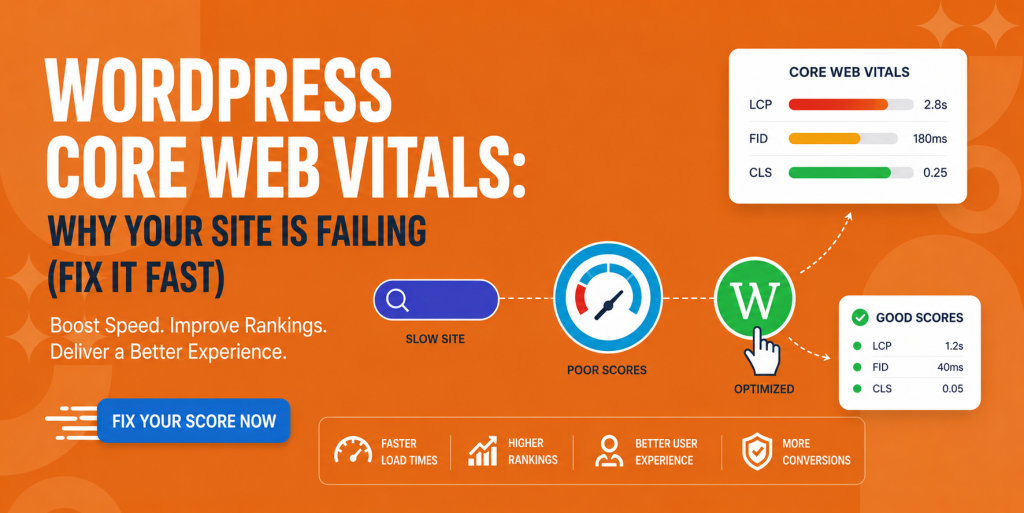
Google ranks websites more when they are sharp and responsible. Edge Computing Core Helps to improve web vital, which are important for SEO:
- LCP (the largest controversial paint): Pages rapidly load large elements (such as videos or pictures).
- FID (first input delay): The button and form users react quickly when clicking.
- CLS (cumulative layout shift): The pages remain stable without unexpected change or jump.
Leads to a fast website:
- Better google ranking
- More sales (Amazon found that even a delay of 100 MS costs 1% in sales)
- Low boom rate (users do not leave live long and fast)
Therefore, edge computing is not only about speed – it also promotes SEO.
Challenges of Adopting Edge Computing
While powerful, edge computing also comes with challenges:
- Complexity – Developers should reconsider architecture for distributed systems.
- Sellers lock-in-some providers restrict flexibility once you adopt their ecosystem.
- Solution: Work with a reliable partner such as DazzleBirds to design a scalable, cost -effective edge strategy.
- Integration cost – CDN and edge computing performance & Edge Platforms (Cloudflare, Akamai, AWS) may require high investment advances.
Conclusion
Edge computing for web development is changing the way the manufacture of websites & apps. By transferring server and data processing close to users, it makes websites fast, safe & more reliable. For developers, this means new opportunities to create personal, real -time experience. For businesses, this means that happy users, better SEOs and strong growth worldwide. Of course, adopting Edge computing website performance brings with challenges like cost, complexity and seller lock-in. But with the right strategy and the right partner, these obstacles can be managed.
In Dazzlebirds, we help brands using edge computing for the creation of scalable, safe and high-demonstration websites that are ready for the future.
FAQs
Ans : The speed of edge computing depends on how close the edge server is for the user. Since the data is processed locally rather than traveling to a distant central server, the delay can be less than 20–50 milliseconds from 200–300 milliseconds. In simple words, it creates websites, apps and devices that almost responds immediately.
Ans :Edge computing is a way to process data close to the user, on the "age" of the network, instead of sending everything to a central data center. For example, instead of a website in the US, a customer's service in India from all over the world is distributed from a nearby server in India. It reduces delay and improves performance.
Ans: The main benefits of edge computing are:
1. Rapid display - The data is processed with the user, the lag is reduced.
2. Better scalability - The charge is spread in many places, avoid surcharge.
3. Better security - Such as DDoS attacks can be blocked on the edge.
4. Data privacy and compliance - sensitive data can be processed locally, completing laws such as GDPR.
5. Strong user experience - websites and apps feel smooth, faster and more reliable worldwide.
Ans: AI is often paired with edge computing to make real -time decisions without waiting for the Edge and cloud. For example:
• A self-driving car processes the sensor data locally to make a split-second-second-second-second-second-seconds decision.
• Smart safety cameras detect unusual activity on the edge before sending alert.
• Websites use AI on the edge to give immediate personal recommendations.
By running the AI model on the edge server, businesses get rapid, clever and more secure applications that do not depend on distant servers.