In the fast-changing digital age of today, companies are under continuous pressure to do additional, smarter, and faster work at scale. As low-code and no-code platforms become increasingly popular, it is now simpler than ever before for business users to organize apps, websites, and workflows without ever writing a line of code. Rapid app development platforms that send fast applications have become the solution of choice for enterprises and startups under fitted talent shortages worldwide.
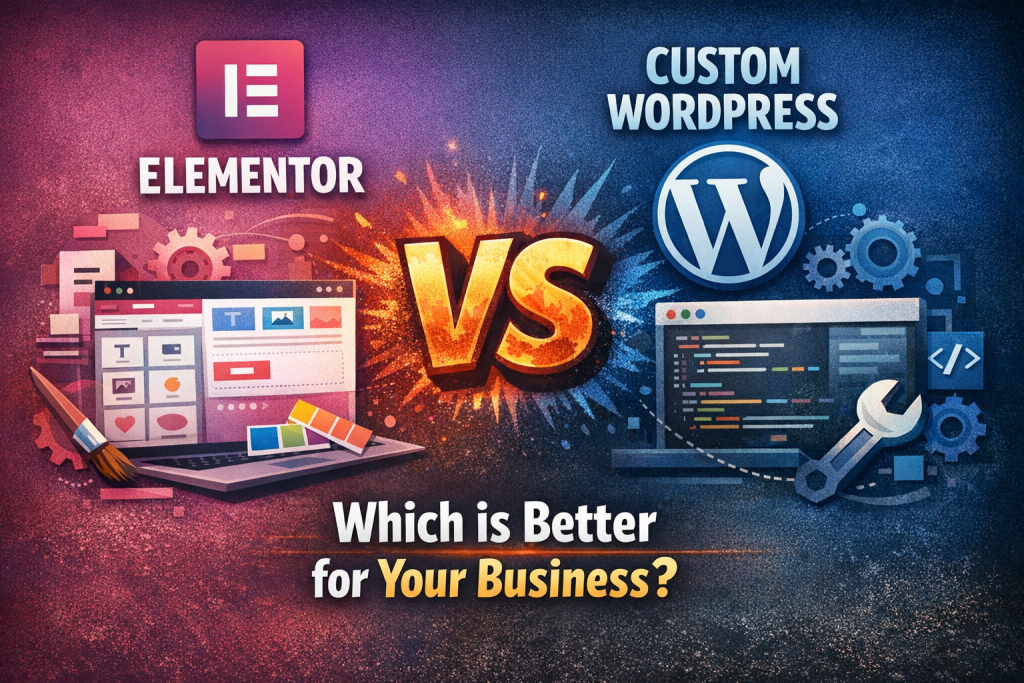
But that’s the twist. While low-code and no-code platforms are wonderful for fast fixes, they tend to be lacking when your business needs high-level security, wide customization, or smooth addition with complicated systems. That’s where custom WordPress plugin development services enter.
At DazzleBirds, we provision companies getting out of the plug-and-play trick. We develop bespoke WordPress plugins that are tailored to your exact requirements—whether you are revolutionizing your IT infrastructure, creating separate user experiences, or connecting to legacy systems as part of your IT modernization plan. In 2025, when low-code no-code Trends rule the day, custom development is where the magic happens. General plugins and band-aid solutions only get you so far. When you need a solution that exactly fits your brand, performance supplies, and long-term growth, you need a team that can create it from the ground up and create it properly. Our WordPress plugin development skill offers that middle ground between the convenience of No Code platforms and the hardness of bespoke engineering. We assist you in leveraging the potential of WordPress to go beyond out-of-the-box restraints and deliver secure, scalable, and high-performance digital experiences.
Whether you are spreading a WooCommerce store, crafting custom APIs, or creating bespoke functionality that your sector demands, DazzleBirds is your go-to partner in the meeting of app building, IT transformation, and enterprise-level WordPress solutions.
What is No-Code?
No-code refers to a method of creating apps without having to study coding. That means even people without technical backgrounds, such as normal office workers, can develop beneficial apps to contribute their work, all without typing a single line of code.
By employing no-code solutions, companies can cut costs and time. Workers do not need to hold back until developers create software; they are able to create what they need themselves. This also allows companies to respond to change and adapt faster with changing demands.
Originally, no-code platforms were employed mainly to develop limited apps for individual activities or teams. For instance, the HR team could develop an app to monitor leave requests, or the sales team could design a basic app to organize their leads.
No-code systems have simple drag-and-drop graphical and tools interfaces. Rather than coding programming commands, people can drag forms, buttons, and images onto the position and screen them wherever they wish. It becomes easy for anyone to create an app that addresses a specific issue in their work.
But today, no-code tools are much more developed. Now, some of the no-code platforms are capable of creating large and strong apps that can be utilized by the entire company, not only by a single department. These apps can process a lot of data, operate for many users concurrently, and even integrate with other software used by the company.
It allows additional individuals to create apps even without technical expertise. The more no-code platforms advance, the additional companies will be using them to simplify their work and remain good in the online space.
What is low-code
Low-code is a method of creating software with simple drag-and-drop functions and visual tools involving minimal coding. It assists technical individuals in developing apps additional fast without essentially writing much code. If essential, they can always insert some coding to personalize the app. This simplifies the process of development and makes it faster.
Low-code platforms have graphical drag-and-drop and user interface functionality that ease app building. That is, you do not strictly need the conventional coding approaches to develop apps. Such platforms simplify this for non-technical users, such as project managers and business analysts, even if they have a lack of formal coding skills. For this reason, they are mentioned to as citizen developers.
Low-code is a simple, graphical method of developing software that assists in developing applications more fast with minimal coding required.
Through low-code solutions, non-technical employees can contribute to the business in many ways.
They can:
Assist in unloading the workload from IT teams
Own tasks such as maintaining and enhancing business processes
Prevent the hazards of using unofficial software by employees
But low-code platforms are not limited to newbies. Veteran developers can even employ them to develop apps simpler and faster. Certain intricate business apps need particular programming expertise, which restricts who can develop them. Low-code platforms eliminate the limitation by enabling developers to develop these apps without having to know all programming languages.
Rather than coding in a conventional coding environment, low-code employs a visual, drag-and-drop approach that’s additional intuitive. It enables companies to develop and deploy their apps professionally and fast. This is what allows all sorts of people from expert developers to subject matter experts, business executives, newcomers, and decision-makers, to help build useful business applications.
Why No-Code Platforms Are the Future of App Development
No-code platforms simplified app development and made it additionally to individuals without technical skill. They also simplify the process of building apps at reduced time and cost. In 2025, 70% of new business apps will be built using low-code/no-code tools by Gartner. They assist companies in creating solutions quicker, automating work, and fast responding to market changes. With the presence of AI and machine learning, no-code platforms are now more talented. Today, users can create intelligent applications that influence NLP, analytical analytics, and visions to make informed decisions.
As companies keep depending on digital tools, the need for no-code platforms will continue increasing. They assist organizations in remaining modest through faster product launching, needful fewer IT support resources, and promoting better partnership between non-technical and technical personnel.
What Are No-Code and Low-Code Tools?
No-code tools contribute to individuals in creating apps without having to write slightly code. They implement informal drag-and-drop functions to develop apps.
Low-code platforms are also like, but need negligible coding. They come in handy for developing more complex apps by integrating visual tools and some coding.
These tools are gaining admiration because companies would like to digitize their business and roll out new digital products fast, without waiting for developers who are typically difficult to obtain.
What is the difference between low-code no-code?
Low-code & no-code are two new methods of developing simpler software faster than traditional coding.
Low-code platforms give you a balance between easy drag & drop tools and the choice to write code when needed.
Low-code is suitable for developers or technical users who require to create additional classy apps and are willing to introduce some coding when essential. They also feature drag-and-drop builders, but they allow users to write custom code for additional complex features. This makes low-code appropriate for power users and professional developers who need to create additional scalable and complex, customized. Developers can link applications to databases, integrate with other applications, and even design reusable code modules that the whole team can share to accelerate their tasks.
No-code platforms are designed for individuals who do not code. These users are regularly referred to as citizen developers, such as managers, business analysts, or other staff members who are not technical specialists. No-code solutions have a drag & drop functionality, visual interface, and pre-built templates. This creates it easy for someone to create straight forward apps, forms, or automate work without writing code. No-code platforms however, have limits. Only what the platform can create, so advanced or highly customized apps are not always effortlessly built with no-code solutions.
Low-code & no-code platforms are both beneficial when it comes to modern app development. The most appropriate option will be determined by how complex the app is supposed to be, how customizable it must be, and if the individual developing the app has any coding skill.
Key Drivers Behind Their Growth
Faster Development: Teams are talented to develop and improve simple versions of products rapidly without having to wait for the IT department.
Reduced Costs: Businesses save due to the fact that they do not need vast groups of developers.
Addressing Talent Gaps: Because able developers are not relaxed to come by, no-code software facilitates non-technical individuals to develop their own apps.
Equipping Employees: Employees from several departments can make apps according to their requirements for daily work.
Rapid IT Modernization: They allow companies to change aged systems fast and professionally.
Limitations
AI-Facilitated Development: AI can suggest improvements, automate processes, and even make simple app logic.
Integrations: The platforms have pre-built connectors for well-known tools.
Deploy Anywhere, Use Once: Apps are effortlessly deployed to web, mobile, and desktop platforms.
Better Security: These platforms include extra strong security and compliance capabilities.
Collective Team Building: Teams can cooperate in real-time while developing apps. While these trends are shortening the process of developing apps, there are still certain important restraints on what they can attain.
Common Use Cases for Custom WordPress Plugin Development
Advanced eCommerce Features: We tailor WooCommerce with bespoke pricing features, payment arrangements, and better stock management.
Custom API Connections: Simply connect your site to CRMs, ERPs, and other third-party applications.
Learning Platforms: We create improved education systems with bespoke reporting, tracking, and options.
Membership and Subscription Sites: Found bespoke gated content, workflows, and various membership tiers.
Custom Dashboards and Reports: Receive educational business visions and data in your WordPress admin area.
Enhanced SEO Plugins: We create plugins utilizing advanced SEO techniques which normal plugins lack.
Better Security Plugins: Specialized plugins that contribute to monitoring security and maintaining GDPR submission for the protection of data.
IT Modernization and The Role of Custom Development
Since companies are determined on renewing their IT infrastructures, it’s deceptive that they need customized digital solutions. Earlier systems should mix with new applications, protection must be extra well, and user interfaces must be extra personalized.
Custom WordPress plugins allow companies to:
Upgrade previous systems without exchanging them all.
Streamline work processes through automation.
Confirm agreement and data protection, mainly in sectors with severe rules.
Solve developer absences by working with expert teams like DazzleBirds.
How DazzleBirds Bridges the Gap
At DazzleBirds, we are of the view that custom development and code tools/no-code complement each other, they are not competitors.
Fast Prototyping using No-Code: We agree companies to validate and test their concepts fast through no-code tools.
Scaling with Custom Plugins: Once the idea is legal, we create custom plugins that scale up, are safe, and perform high.
Full IT Modernization: Our plugin development serves your better mission of modernizing and prettying your IT infrastructure.
Our team contains seasoned WordPress developers, UX designers, and business planners. We confirm each plugin we develop not only performs professionally but also aligns with your business, assists and objects your growth.
Conclusion
In 2025, low-code & no-code technologies are making it faster and earlier for companies to develop digital or app products. However, these tools have their limits in terms of security, customization, and handling complex wants. That is where custom WordPress plugin development comes in. We support businesses beyond the limitations of no-code platforms. Whether you need custom APIs, learning platforms, eCommerce platforms, or better security, we design plugins custom-made to your careful requirements. They assist businesses in saving time, lowering costs, and bridging developer gaps. Through a mixture of no-code speed and the strength of custom development we allow you to develop digital solutions that are mountable, safe, and growth-ready. With DazzleBirds, we bridge this gap by developing custom WordPress plugins that evolve with your business, tailor to your exact requirements, and accommodate your tech infrastructure. Through the blending of no-code speed with the power of custom coding, we enable your business to grow in a secure, intelligent, and efficient manner.
Where no-code & low-code solutions are perfect for creating something fast, they can not always provide to complicated requirements like robust security, advanced features, or integration with legacy systems