A business invests in website redesign services and gets exactly what was briefed. Cleaner visuals, updated branding, and a homepage that finally looks modern. Three months later, the same problems persist. Pages load slowly on mobile. The inquiry rate has barely moved. The marketing team still cannot update the service pages without calling a developer. Google rankings have not improved in any meaningful way.
This is not an unusual outcome. It happens because design problems are visible and easy to articulate, while structural problems are not. A business owner can point to a competitor’s website and say, “The design looks better.” Nobody points at a URL structure and says the hierarchy is wrong. The first instinct is almost always to fix the visible issues, often overlooking the actual cause of the problem.
The decision between redesign and a full website rebuild is one of the most important choices a growing business makes about its digital presence. Getting it right the first time saves significant time, budget, and frustration. Getting it wrong means spending money twice.
This article breaks down exactly when redesign is the right call, when a rebuild is the better long-term investment, and how to read the signals your own website is giving you.
Website Redesign Services vs Website Rebuild: What Is the Difference?
Website redesign covers visual presentation, layout structure, branding updates, and user experience improvements, typically within the existing technical framework. The website rebuild addresses the foundation: site architecture, CMS configuration, page hierarchy, performance, SEO structure, and scalability. Redesign is the right move when a website works well but looks outdated. A rebuild is the right move when the website is slow, structurally weak, difficult to manage, or actively limiting business growth.
1. Why Businesses Usually Look for Website Redesign Services First
Design problems are the easiest to spot and to communicate internally. A business owner can take a screenshot of the homepage and show what feels wrong. A marketing manager can open a competitor’s website and point out the contrast. The visual gap is obvious and straightforward to brief an agency on. So the first instinct is almost always to start with design.
That instinct is not entirely wrong. An outdated design does affect trust. When a potential client lands on a website that looks like it was built a decade ago, they draw conclusions about the business, whether it is still active, how much attention it pays to detail, and whether it is the kind of company they want to work with. A weak homepage layout buries the most important services. A poor mobile experience kills engagement before a visitor has read a single line. Old branding creates a disconnect between how the business presents itself everywhere else and how it shows up online.
Website redesign services address these problems well. They improve visual hierarchy, modernize brand presentation, clarify how services are communicated, and make the overall experience feel more credible and current.
The limitation is that redesign only fixes what is on the surface. And sometimes the surface is not where the problem actually lives.
2. When Website Redesign Services Are Enough
There are plenty of situations where a redesign is genuinely the right answer. Not every outdated-looking website is broken underneath.
If the website loads consistently fast on mobile and desktop, that is a healthy technical foundation. If the CMS is manageable, meaning the team can update content, publish pages, and make routine changes without developer involvement, the backend is working as it should. If the SEO structure is clean, with logical URL hierarchies, no duplicate content issues, no page cannibalization, and reasonable internal linking, it is a structure worth building on rather than replacing.
Redesign makes sense when the backend is clean and stable. When pages load well, and Core Web Vitals are in reasonable shape. When the service structure already reflects what the business offers. When the inquiry path functions but is not visually compelling. When the primary issue is brand alignment or how the site presents itself, rather than how it performs.
Consider a professional services firm, such as solicitors, consultants, or financial advisers, that built a solid website several years ago; has ranked for relevant local search terms; generates steady inquiries; but now looks visually dated compared to newer competitors entering the market. A redesign of the key pages, a modernized layout, updated photography, and refreshed copy are likely sufficient. The structure underneath is already doing its job. Replacing it would discard something that is working.
3. When a Website Rebuild Is the Better Choice
This is the decision most businesses avoid because it sounds more disruptive and more expensive. But a rebuild becomes the better long-term investment the moment the website’s foundation is the problem, not its appearance.
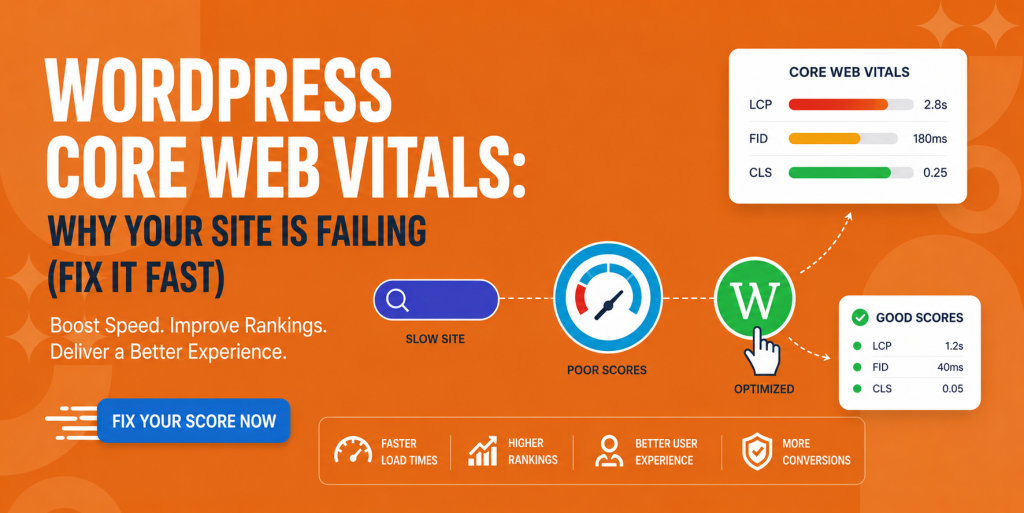
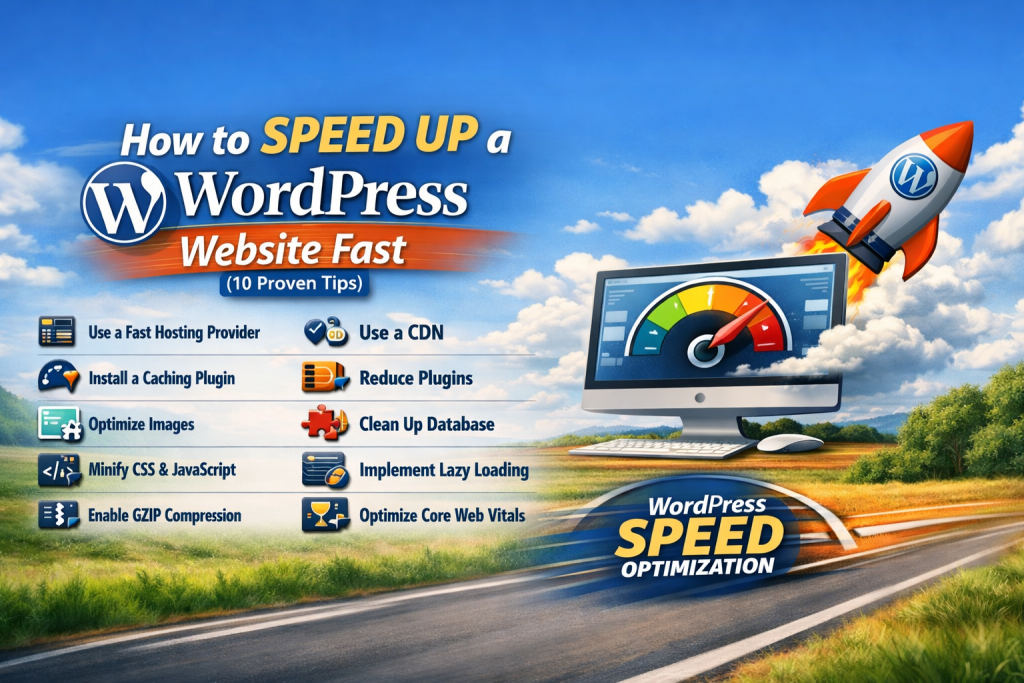
Performance is one of the clearest signals. If pages load slowly even after image compression and basic optimisation, the issue is usually structural. It sits in the theme, the plugin stack, the hosting configuration, or the way the site was originally built. These are not problems that a new design layer resolves.
Backend usability is another clear signal. If updating a service page requires navigating through nested page builders, editing raw shortcodes, or working around templates that break when modified, the CMS is working against the team rather than for them. That friction compounds over time. Content stays outdated because updating it is too difficult. New services get added as afterthoughts rather than properly structured pages. The website drifts further from the business it is supposed to represent.
SEO structure is perhaps the most commercially significant issue. If there are duplicate pages competing for the same keywords, URL structures that follow no logical pattern, service pages that no longer reflect what the business actually sells, or internal linking that has been patched together over years of incremental additions, a visual redesign will not solve any of this. Search engines need architecture, hierarchy, and clarity to understand what a website is about and which pages should rank for which queries. Redesign does not provide that. A properly planned rebuild with website performance optimisation and website maintenance services built in from the start does.
Growth mismatch is a common reason rebuilds become necessary. The business has expanded its services, entered new markets, or changed its model significantly since the original site was built, but the website still reflects where the company was three or four years ago. This is not a content update job. The entire page architecture needs to be rethought to reflect what the business actually does and who it serves.
Recurring technical problems are another clear signal. When plugins conflict regularly, when updates break pages, and when security patches are applied one after another without resolving the underlying instability, the website is communicating something about the quality of its original build.
4. Website Redesign vs Website Rebuild: Quick Comparison
Situation
Better Choice
Why
The website looks outdated but loads fast and works well
Redesign
The issue is mostly visual
The website is slow on mobile even after optimisation
Rebuild
Performance problems are often structural
SEO structure is weak, with duplicate pages or poor hierarchy
Rebuild
Search visibility depends on architecture
Brand identity has changed but the backend is healthy
Redesign
Visual alignment may be sufficient
Business services have changed significantly
Rebuild
Page structure and content flow need rebuilding
The website depends on too many plugins and ongoing patches
Rebuild
Long-term stability is compromised
The mobile layout is poor but the site is technically clean
Redesign
UX improvement can resolve the issue
The admin team struggles to update pages without developer help
Rebuild
CMS and backend usability is part of the problem
5. Why a Rebuild Can Improve SEO More Than a Redesign
SEO is not a content-only problem. Many businesses invest consistently in blog writing, keyword research, and metadata improvements, only to find that rankings barely move. The reason is often structural, not content-related.
A properly executed rebuild, particularly one that uses custom WordPress development with a planned information architecture, can improve multiple ranking factors simultaneously.
Site architecture improves when pages are structured with a clear hierarchy and search engines can understand how the content relates to each other. URL structure becomes logical and reflects the actual service offering. Internal linking connects service pages, location pages, and supporting content to convey topic depth and page authority. Page speed improves significantly in a clean rebuild because legacy bloat from outdated plugins, heavy themes, and accumulated code is removed rather than worked around. Mobile usability improves when a site is built mobile-first rather than adapted for mobile after the fact. Crawlability improves when there are fewer orphan pages, cleaner sitemaps, and a logical site configuration.
A redesign can improve a website’s appearance. A rebuild, planned and executed properly, makes it easier for both users and search engines to understand the site, which is what drives meaningful organic growth over time.
6. The Business Cost of Choosing the Wrong Option
The cost of choosing redesign when a rebuild is needed is not only financial. It is the cost of delayed growth.
The site looks better after the redesign. There is a period of confidence. Then the same problems begin to resurface. The inquiry rate does not improve because the conversion problem was never visible. It was in the page structure and the clarity of the service offering. Slow pages remain slow because the theme and plugin stack were never addressed. SEO problems persist because the URL structure and internal linking were left unchanged. The marketing team is still calling a developer to update the service pages because the CMS has never been improved.
Six to eighteen months later, the business is in the same situation, except that money has already been spent on a redesign that did not resolve the underlying problem, and a rebuild is now on the table. The redesign cost was not wasted in isolation. It was wasted because it was applied to the wrong problem.
7. Website Rebuild Checklist: Signs Redesign Is Not Enough
You may need a rebuild if the website is still slow, even after image compression and basic performance improvements. You may need a rebuild if the backend requires developer involvement for routine content updates. If service pages do not reflect what the business currently offers, that is a structural problem. If users struggle to find key information or the inquiry path is unclear, the architecture is working against the visitor rather than guiding them.
Low lead volume despite consistent traffic is one of the strongest signals. If pages are attracting visitors who leave without inquiring, the problem is usually the conversion path and page structure, not the design alone.
Additional rebuild signals include the following. The mobile experience is broken or significantly degraded. Outdated plugins or an aging theme is limiting the possible improvements. The SEO structure has competing pages or a weak hierarchy. Old content is cannibalizing newer service pages. Pages break after routine WordPress or plugin updates. Content updates take disproportionate time and effort. The business has grown considerably while the website structure has remained unchanged.
If three or more of these apply, a redesign is unlikely to resolve the core problem.
8. How DazzleBirds Would Approach This Decision
DazzleBirds would not walk into a client conversation with a recommendation based on how the website looks. The right answer comes from reviewing what is actually happening with the site before any recommendation is made. That review covers ten areas:
Page speed and Core Web Vitals to understand whether slow load times are a surface issue or a structural one
Mobile experience, not just how pages render but how they function across device types
SEO structure including URL hierarchy, internal linking, page cannibalisation, and indexability
Whether the current page architecture supports the services the business actually sells today
CMS and backend usability, specifically how long it takes to update a service page independently
What is creating friction in day-to-day content management for the internal team
Conversion path analysis to understand where visitors drop off and whether the enquiry flow is clear
Whether the right pages are serving the right roles in the user journey
Plugin and theme health to assess whether the current stack is stable and capable of supporting future growth
Business direction, looking at whether the website structure reflects where the business is now and where it intends to go
If the issue is mostly visual and the technical foundation is sound, DazzleBirds may recommend redesigning specific pages rather than the entire site. If the issue is structural, technical, or conversion-related, WordPress development services built around a proper rebuild plan are the recommendation that will actually deliver a return.
The goal is not to sell the larger project. It is recommended to choose the option that genuinely fixes the problem.
9. What a Good Website Rebuild Should Include
A rebuild is not a new design applied to a cleaned-up backend. A properly executed rebuild delivers a clean site architecture where every page has a clear role and a logical position in the hierarchy. Service pages are built around real search intent, not copied from the old site or structured around internal assumptions about what visitors want to see.
Pages load fast because the build is lean from the start, not optimized as an afterthought after problems have already appeared. The design is built mobile-first, reflecting how most business website visitors actually browse. The CMS is configured so the internal team can update content, add pages, and manage the site without developer dependency for routine tasks.
A scalable design system means that future services, campaigns, or location pages can be added without breaking the site’s visual consistency. Conversion-focused layouts place contact paths and inquiry forms where user behavior actually leads, not where they feel visually convenient. Technical stability is built in through fewer plugins, cleaner code, and a structure that does not require constant firefighting.
Ongoing website maintenance services should be part of the plan from the start, so the rebuild does not slowly decay into the same problems the previous site had. The rebuild is the foundation. Everything built on top of it, including content strategy, SEO work, conversion rate improvement, and paid campaigns, performs better when the foundation is right.
10. How to Decide: Redesign or Rebuild?
Choose redesign if the site performs well technically, the backend is manageable without developer help, the SEO structure is clean and logical, the service offering has not changed significantly, and the primary issue is visual presentation or outdated branding.
Choose rebuild if the site is slow and performance problems are structural, the backend requires developer involvement for routine tasks, SEO problems keep recurring despite surface-level fixes, the conversion path is unclear or consistently underperforming, the business has grown, but the website structure has not kept pace, or the team has outgrown the limitations of the original build.
Conclusion
Website redesign services are the right tool when a business needs a stronger visual presentation, better brand alignment, and a cleaner user experience and when the technical foundation underneath is already working. When the website is slow, structurally weak, difficult to manage, or actively limiting lead generation and search performance, design is not the problem. Improving the appearance of a broken foundation does not fix the foundation. It simply makes the same underlying issues look better while they continue to limit growth.
A redesign can make a website look better. A rebuild can make the website work better.
DazzleBirds approaches this decision by reviewing what is actually happening with the site before recommending anything. Performance, SEO structure, user behavior, conversion paths, CMS usability, and business direction are all part of that assessment. If the right answer is targeted redesign work on specific pages, that is the recommendation. If the right answer is a properly planned rebuild through WordPress development services or a WooCommerce development project for eCommerce businesses, that is what gets proposed.
The objective is a website that generates real business results, not just one that looks like it should.
FAQs
Website redesign services involve improving the visual design, layout, branding, and user experience of an existing website, typically without replacing its technical foundation. This includes updating page layouts, refreshing design elements, improving navigation clarity, and aligning the site's appearance with current brand standards. Redesign is best suited for websites that are technically healthy but visually outdated or misaligned with the business's current positioning.
A redesign improves how a website looks and feels by updating visuals, layouts, and user experience within the existing structure. A rebuild addresses the underlying foundation, including site architecture, CMS configuration, URL structure, page hierarchy, performance, and scalability. Redesign is a surface-level improvement. A rebuild is a structural one. Both are valid approaches, and the right choice depends entirely on where the actual problem is located.
A business should consider a rebuild when the website is slow, structurally disorganized, difficult to manage internally, or no longer reflects the current service offering. If SEO problems keep returning despite attempts to fix them, if conversion rates are consistently low despite reasonable traffic, or if the website requires frequent technical intervention to remain functional, these are signals that a redesign will not solve the underlying problem.
In many cases, yes, particularly when the existing site has structural SEO problems. A rebuild allows for proper site architecture, a clean URL structure, logical internal linking, and service pages structured around real search intent. These structural factors have a significant impact on organic visibility that visual redesign cannot meaningfully address. Website performance optimisation is far more effective when built into a rebuild from the start rather than applied to a legacy structure.
Separate the visual problems from the functional ones. If the website loads quickly, the team manages it without difficulty, SEO rankings are stable, and the inquiry path works reasonably well, a redesign may be sufficient. If the site is slow, the backend is difficult to manage, SEO problems keep recurring, and leads are consistently low despite traffic, the problem is structural. That is a rebuild conversation, not a redesign one.


 WooCommerce Solutions
 WordPress Solutions